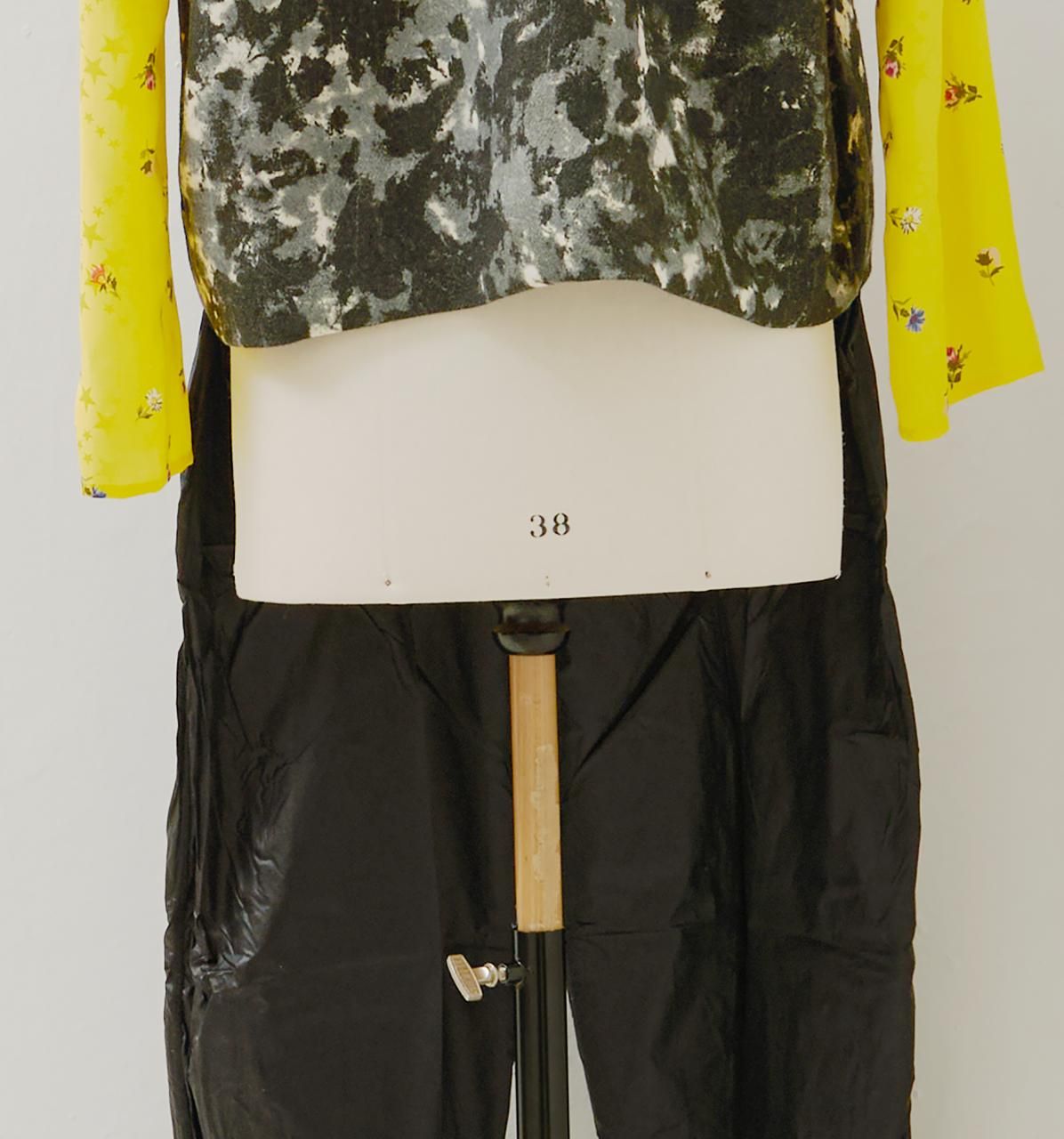
Handcrafting clothing involves a physical intimacy between the maker and both the material and the body for which the garment is designed. The physical act of weaving, for example, transforms the weaver’s body into a sort of machine that produces a textile which, in a fragmented way, reproduces the surface of a future wearer’s body. Weaving is a present act that constantly works in potential, revealing what is hidden: the future body of the person who will wear the garment. Although not starting from scratch, the same occurs with the process of pattern-making and the very act of cutting the fabric and assembling the parts to form the garment. The person who makes the clothing, who designs the garment, is constantly working with the body’s memory, through a system of measurements and proportions, and this memory always falls short of the object it recalls; in this failure, it reinvents it. Memory gradually assigns functions and forms to the parts so that they fit the body and operate appropriately. These forms and functions give the garment a memory of its own. When worn, the garment orchestrates that imagined body.
This Collection explores the gap where memory fails in the face of the body that remembers, and, in that failure, constructs another memory that dreams and invents a new body. It is structured around three themes from which the invention of the body is constructed: possession, memory, and the loss of autonomy.